Laboratory for
Energy and Nanoscale
Science
We explore nanoscale phenomena to develop next-generation energy conversion and storage technologies. By understanding the fundamental nature of matter, we engineer a sustainable future.
Lab Members
A dedicated team of researchers pushing the frontiers of energy and nanoscale science.

Hayoung Park 박하영
Education
-
B.S. 2018
Seoul National University, College of Liberal Studies
Major: Chemical and Biological Engineering · Minor: Computer Science Engineering - Ph.D. 2024 Seoul National University, Department of Chemical and Biological Engineering
Research Careers
- 2024.06 – 2026.01 Postdoctoral Researcher, University of California, Los Angeles
- 2026.03 – Present Assistant Professor, Ewha Womans University
Research Interests



Research Areas
We uncover nanoscale phenomena in energy materials and translate fundamental discoveries into practical technologies.
Next-Generation Battery Materials
Developing advanced battery systems — including lithium metal and all-solid-state batteries — tailored to the energy demands of EVs, energy storage systems (ESS), and urban air mobility (UAM).
Reaction Mechanisms & Degradation Modes
Elucidating the fundamental principles governing electrochemical reactions, electrode processing, and failure modes in battery systems to enable rational design and long-term reliability.
Electrode–Electrolyte Interface Engineering
Understanding the formation principles of electrode–electrolyte interfaces (SEI/CEI) at the atomic scale, and applying this knowledge to engineer high-performance electrolytes and interphase layers.
Advanced Characterization Platform
Developing cutting-edge TEM-based analytical techniques — including in situ, cryo, and 4D-STEM — combined with AI-based data processing to push the boundaries of nanoscale characterization.
Selected Publications
Representative research outcomes published in leading international journals.
Understanding Interfacial Chemistries of LiPF6-Asymmetrically Fluorinated Glyme Ether Electrolytes for High-Voltage Lithium Metal Batteries
Anomalous Solubility-Inverted Behavior of LiPF6 in Glyme Ether Solvents for High-Voltage Electrochemistry
Direct Electrochemical Propylene Epoxidation over Amorphized Perovskite Oxide in Non-halogenated Aqueous Electrolyte
Atomic Structure Modulations in Ion-Exchanged Hydroxyapatite Investigated by HRTEM and Single Image Denoising
Electrolyte-dominated reversible Na ion storage in Na0.4V2O5 using the DME-based electrolyte for high-performance Na-ion batteries
Unveiling crystal orientation-dependent interface property in composite cathodes for solid-state batteries by in situ microscopic probe
A Strongly Binding Lithium Salt with Stepwise Interphase Formation Mechanism Enables Stable High-Voltage Lithium Metal Batteries
Resolving Oxidative and Corrosive Calendar‐Aging via Electrolyte Engineering for Stable Lithium Metal Batteries
Origin and mitigation of premature dead Li formation at the current collector interface in high energy batteries
Degradation Mechanism Induced by Depth-Dependent Inhomogeneity in Thick High-Areal-Capacity Graphite Electrode
Additive-Driven Nanoscale Architecture of Solid Electrolyte Interphase Revealed by Cryogenic Transmission Electron Microscopy
Revealing Early-Stage Failure Mechanisms of Sulfide Solid Electrolytes for All-Solid-State Batteries by In Situ Electron Microscopy
Early Stage Li Plating by Liquid Phase and Cryogenic Transmission Electron Microscopy
Hybrid surface coating layers compromising boron and phosphorous compounds on LiNi0.90Co0.05Mn0.05O2 cathode materials to ensure the reliability of lithium-ion batteries
In situ multiscale probing of the synthesis of a Ni-rich layered oxide cathode reveals reaction heterogeneity driven by competing kinetic pathways
Liquid-Phase Transmission Electron Microscopy for Reliable In Situ Imaging of Nanomaterials
Wafer-Scale Production of Transition Metal Dichalcogenides and Alloy Monolayers by Nanocrystal Conversion for Large-Scale Ultrathin Flexible Electronics
Uniform synthesis of palladium species confined in a small-pore zeolite via full ion-exchange investigated by cryogenic electron microscopy
Reversing the Irreversible: Thermodynamic Stabilization of LiAlH4 Nanoconfined Within a Nitrogen-Doped Carbon Host
Direct Observation of Redox Mediator-Assisted Solution-Phase Discharging of Li-O2 Battery by Liquid-Phase Transmission Electron Microscopy
Lab News
Welcome, New Lab Members!
We are excited to welcome new members to LENS Lab! Hyewon Kang (강혜원) joins as an M.S. student, and Hyeonsu Jung (정현수) and Jieun Song (송지은) join as undergraduate research interns. We look forward to growing together and doing great science!
LENS Lab is Now Open at Ewha Womans University!
We are thrilled to announce the official launch of the Laboratory for Energy and Nanoscale Science (LENS Lab) at the Department of Chemical Engineering & Materials Science, Ewha Womans University. Led by Prof. Hayoung Park, the lab will focus on battery materials, electron microscopy, and nanoscale investigation of electrode–electrolyte interfaces. We are currently recruiting motivated graduate students — please visit the Contact page for more information.
Join UsLab Gallery
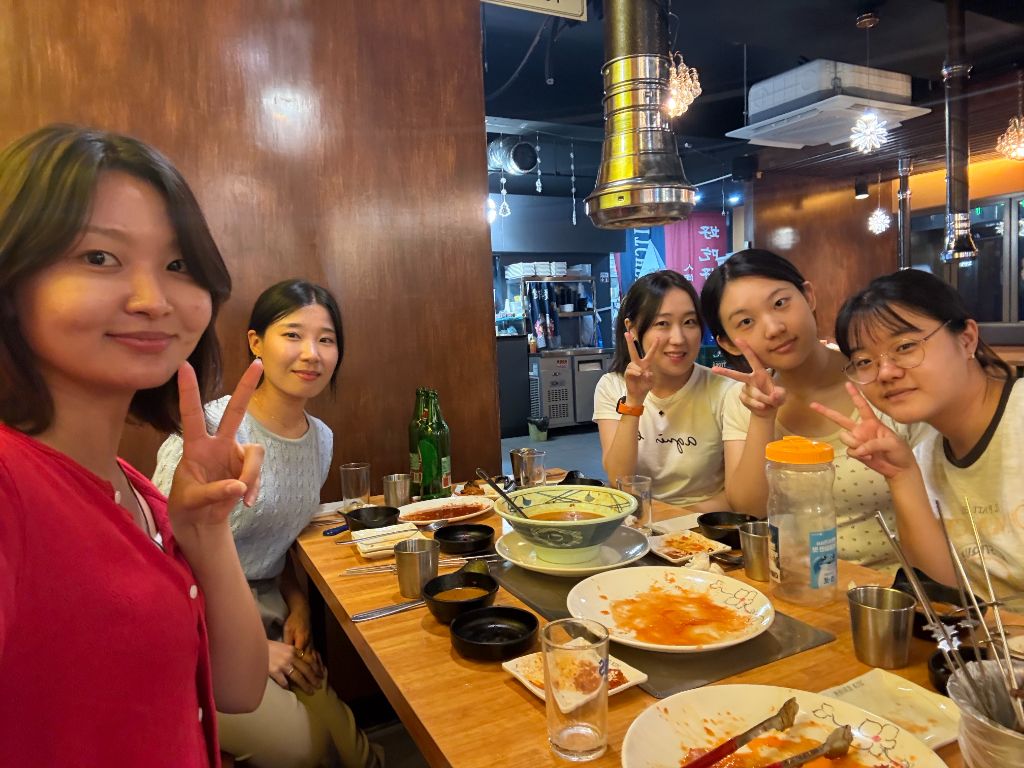
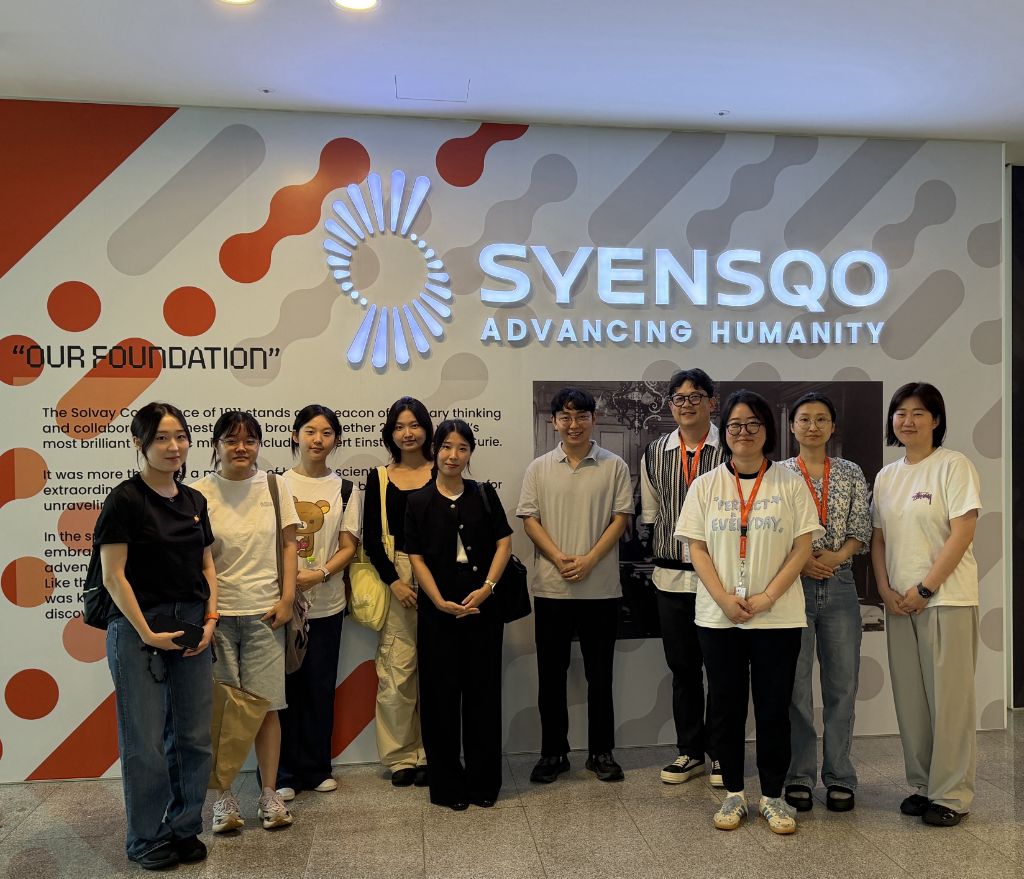
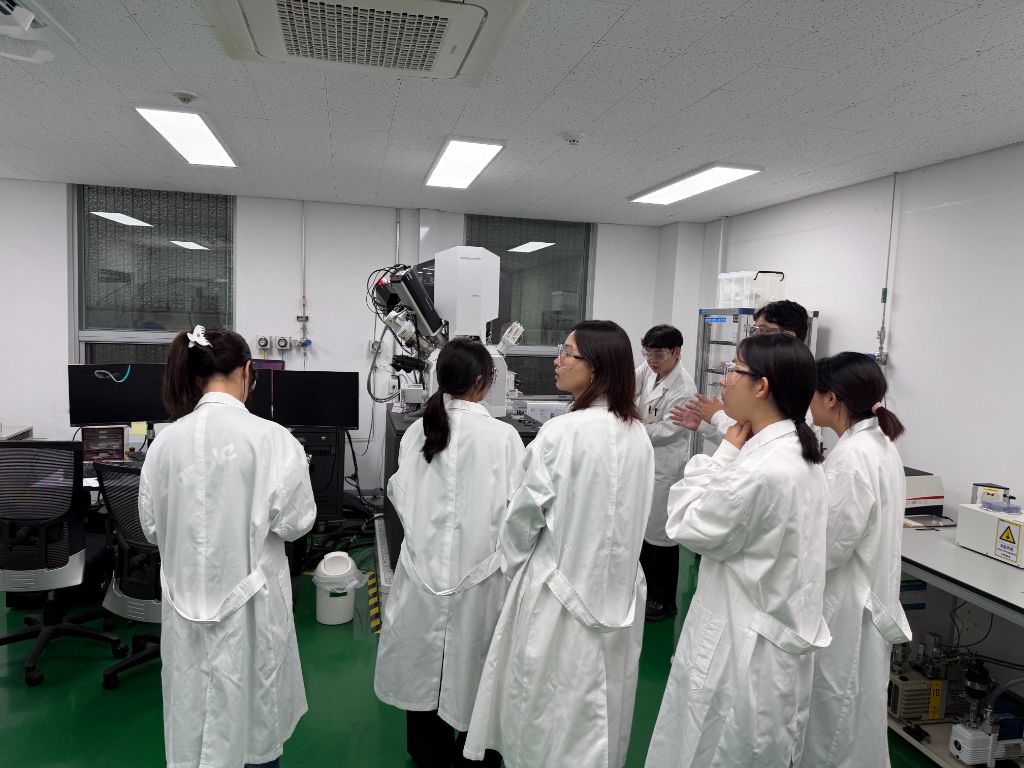
A glimpse into our research environment and team moments.
Join Us & Get in Touch
Prospective students and collaborators are always welcome. Send us an email or fill out the form below.
Lab
Room 408, New Engineering Building
52 Ewhayeodae-gil, Seodaemun-gu
Seoul 03760, Ewha Womans University
Office
Room 333, Jinseonmi Hall
Ewha Womans University
Tel.
+82-2-3277-4721
Now Recruiting Graduate Students
We are accepting applications for M.S., Ph.D., and integrated M.S.–Ph.D. programs. If you are passionate about energy materials and nanoscience, apply via the form or email us directly.
- Full scholarship & stipend support
- Opportunities to attend international conferences
- World-class research environment
52 Ewhayeodae-gil, Seodaemun-gu, Seoul 03760, Republic of Korea